
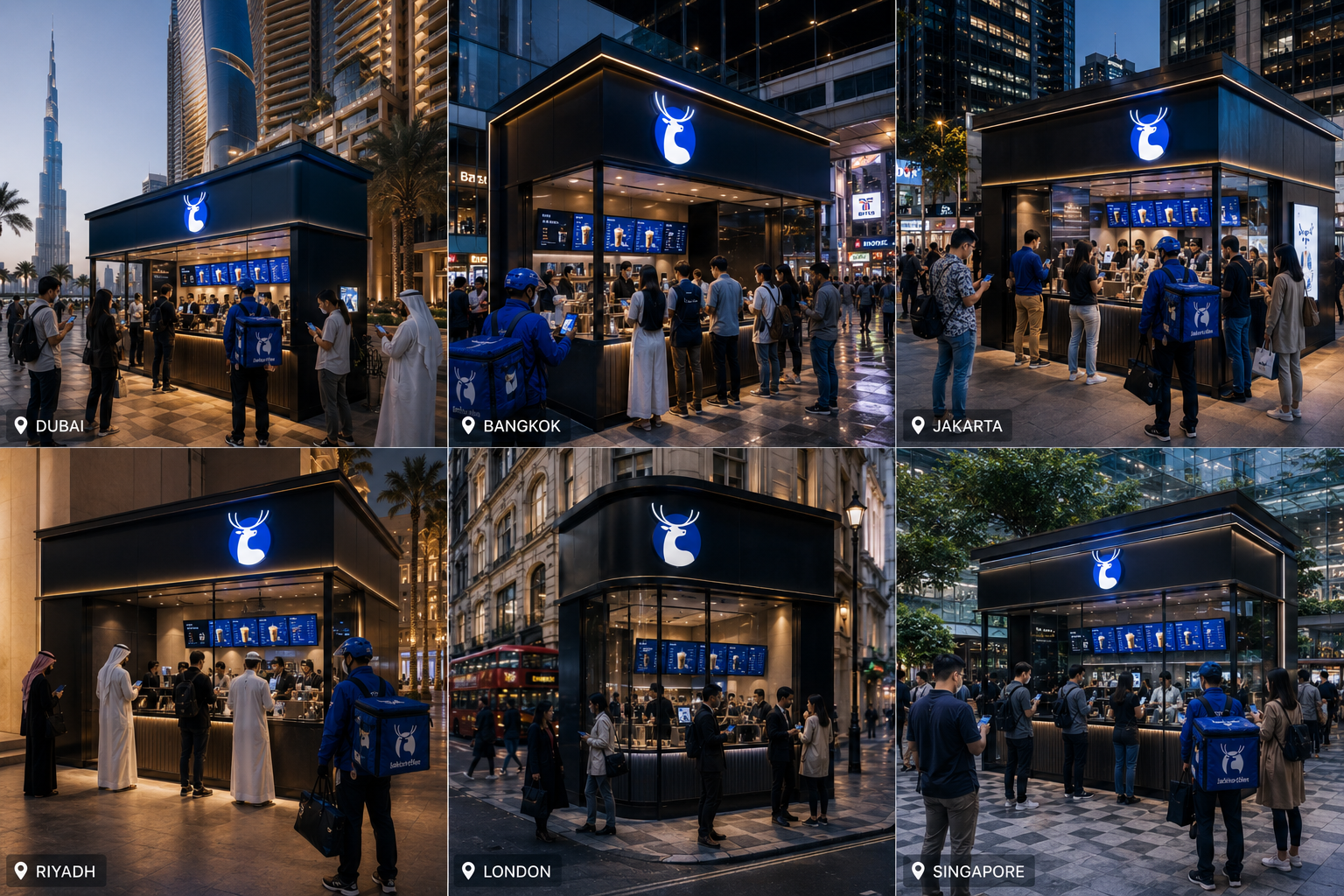
The global coffee industry is entering a new phase of international expansion.
For decades, premium coffee growth was concentrated primarily around mature Western café markets dominated by traditional large-format retail environments. That structure created globally recognized brands, but changing consumer behavior, mobile ordering ecosystems, and delivery-driven urban retail are reshaping where the strongest growth opportunities now exist.
Modern coffee expansion increasingly favors markets with:
- dense urban populations
- strong smartphone penetration
- delivery infrastructure maturity
- commuter-driven consumption
- premium beverage demand
- rapidly modernizing retail ecosystems
This shift is creating significant opportunities for digitally integrated coffee systems built around:
- app-based ordering
- compact deployment
- operational scalability
- urban convenience
- high-frequency consumer behavior
Luckin Coffee’s rapid rise reflects these broader market conditions.
Its operating structure aligns closely with how modern urban populations increasingly consume beverages inside digitally connected retail ecosystems.
The question is no longer whether coffee demand will continue growing globally.
The more important question is which countries are structurally positioned to support the next generation of scalable digital coffee expansion.
What Makes a Strong Coffee Expansion Market?
Not every country supports scalable modern coffee deployment equally.
The strongest expansion markets typically demonstrate several overlapping characteristics:
- high urban density
- younger demographics
- growing middle-class purchasing power
- strong commuter traffic
- app-based purchasing behavior
- premium retail growth
- delivery ecosystem maturity
- rising café culture
Markets with these characteristics tend to support:
- high-frequency beverage consumption
- digital ordering adoption
- multi-unit rollout capability
- scalable urban penetration
For modern coffee systems, technology infrastructure is increasingly just as important as traditional café demand.
Why Urban Density Matters
Urban density plays a critical role in coffee scalability.
Dense cities create:
- higher transaction frequency
- stronger commuter consumption
- delivery optimization opportunities
- improved operational efficiency
- greater customer accessibility
Compact digitally integrated coffee systems perform particularly well in:
- transit corridors
- business districts
- university clusters
- mixed-use developments
- residential tower ecosystems
This is one reason many of the strongest coffee expansion opportunities are concentrated in rapidly urbanizing global cities.
The Middle East
One of the Strongest Premium Beverage Growth Regions
The Middle East has become one of the most strategically important regions for modern coffee expansion.
Several structural trends support continued growth:
- luxury retail development
- premium consumer spending
- younger urban populations
- high smartphone penetration
- rapidly expanding delivery infrastructure
- strong café culture
The region combines premium purchasing behavior with modern retail infrastructure, creating favorable conditions for digitally integrated coffee systems.
United Arab Emirates
The United Arab Emirates remains one of the strongest coffee expansion markets globally.
Dubai and Abu Dhabi continue attracting:
- luxury retail investment
- international consumer brands
- digitally engaged populations
- commuter-driven purchasing behavior
Several factors make the UAE particularly attractive:
- high disposable income
- world-class mall infrastructure
- dense urban retail zones
- delivery ecosystem maturity
- premium lifestyle consumption
Compact digitally integrated coffee formats align strongly with urban behavior across the UAE.
Saudi Arabia
Saudi Arabia is rapidly emerging as one of the most important coffee growth markets in the Middle East.
Key drivers include:
- rapid urban development
- large younger population
- digital adoption growth
- increasing premium beverage demand
- expanding retail infrastructure
Cities such as:
- Riyadh
- Jeddah
- Dammam
continue seeing strong demand for modern café concepts and app-based consumer services.
The country’s long-term urban development projects may further accelerate premium beverage consumption patterns.
Qatar
Qatar continues supporting premium coffee growth through:
- high-income consumer demographics
- luxury retail environments
- strong café culture
- digitally connected urban populations
Doha’s compact urban structure creates favorable conditions for scalable commuter-oriented coffee deployment.
Kuwait
Kuwait remains highly attractive due to:
- premium spending behavior
- mall-centered retail culture
- strong café demand
- younger digitally engaged demographics
The country’s consumer environment aligns closely with app-based premium beverage systems.
Southeast Asia
One of the Fastest-Growing Coffee Consumption Regions
Southeast Asia remains one of the strongest long-term coffee growth regions globally.
Several structural conditions support expansion:
- mobile-first consumer behavior
- dense urban populations
- strong delivery adoption
- younger demographics
- rapidly expanding middle class
- high commuter activity
The region aligns naturally with digitally integrated coffee infrastructure.
Indonesia
Indonesia represents one of Southeast Asia’s largest long-term coffee opportunities.
Jakarta’s urban density, commuter traffic, and app-based consumer behavior create strong conditions for:
- compact coffee deployment
- delivery integration
- multi-unit scalability
The country’s expanding middle class and younger population continue driving premium beverage demand.
Thailand
Thailand continues experiencing rapid café culture growth, particularly in Bangkok.
Key expansion advantages include:
- commuter-heavy urban zones
- strong mall ecosystems
- tourism activity
- delivery infrastructure maturity
- premium beverage demand
Bangkok’s retail environment strongly supports digitally integrated coffee concepts.
Vietnam
Vietnam remains one of the most important coffee cultures globally.
Ho Chi Minh City and Hanoi continue evolving rapidly through:
- urban modernization
- younger consumer growth
- mobile-first purchasing behavior
- premium café demand
Modern coffee systems integrating convenience and digital ordering may continue scaling effectively within the country’s urban centers.
Philippines
The Philippines benefits from:
- high smartphone usage
- strong social consumption culture
- dense urban retail environments
- expanding delivery ecosystems
Metro Manila’s commuter-driven structure creates strong conditions for digitally integrated coffee retail.
Malaysia
Malaysia continues attracting premium beverage growth through:
- modern shopping infrastructure
- urban density
- digitally connected consumers
- strong café culture
Kuala Lumpur remains one of the region’s strongest expansion environments for scalable coffee systems.
Europe
The Shift Toward Convenience-Oriented Coffee Retail
Several European markets are increasingly shifting toward:
- commuter-focused purchasing
- fast pickup systems
- delivery-enabled beverage retail
- compact urban deployment
This transition creates strong opportunities for digitally integrated coffee systems.
United Kingdom
London remains one of Europe’s most important premium coffee markets.
The city’s:
- commuter density
- office culture
- delivery infrastructure
- urban mobility
support high-frequency beverage consumption.
Compact pickup-oriented formats align increasingly well with modern London retail behavior.
Spain
Madrid and Barcelona continue seeing strong demand for:
- premium coffee concepts
- commuter-oriented retail
- digitally integrated food and beverage systems
The rise of mobile ordering behavior is creating favorable conditions for scalable coffee deployment.
Germany
Berlin’s younger demographic profile, startup ecosystem, and urban commuter culture continue supporting modern coffee expansion.
Digitally integrated beverage systems increasingly align with changing consumer behavior across major German cities.
Latin America
Emerging Opportunities for Premium Coffee Systems
Several Latin American markets are also evolving rapidly through:
- urbanization
- delivery infrastructure growth
- mobile payment adoption
- premium beverage consumption
Key cities attracting attention include:
- Mexico City
- São Paulo
- Santiago
- Bogotá
These markets continue modernizing retail ecosystems while maintaining strong beverage consumption culture.
Why Investors Are Watching These Markets
The strongest coffee expansion markets increasingly combine:
- digital consumer behavior
- operational scalability
- premium beverage demand
- urban growth
- delivery integration
- technology adoption
Investors increasingly favor markets where:
- mobile ordering is normalized
- commuter density is high
- premium retail culture is growing
- operational rollout can scale efficiently
Digitally integrated coffee systems align particularly well with these conditions.
The Future Geography of Coffee Expansion
The next generation of global coffee growth may increasingly concentrate around:
- digitally connected urban populations
- delivery-driven retail ecosystems
- younger demographics
- premium convenience culture
- high-density commuter cities
Traditional café culture will remain influential.
However, scalable digital coffee systems may increasingly dominate:
- urban commuter zones
- mixed-use developments
- transit-oriented retail
- delivery-focused consumption ecosystems
This creates major opportunities for expansion groups capable of combining:
- operational discipline
- technology integration
- territory intelligence
- urban deployment strategy
Strategic Conclusion
The best countries for Luckin Coffee expansion are not simply the markets with strong coffee demand.
They are the markets where:
- digital consumer behavior
- delivery infrastructure
- urban density
- commuter culture
- premium beverage demand
- scalable retail deployment
intersect most effectively.
The rise of app-based ordering, compact retail systems, and convenience-driven consumption is reshaping the geography of global coffee growth.
As international retail behavior continues evolving, countries capable of supporting digitally integrated coffee infrastructure may become the most strategically important beverage expansion markets of the next decade.
For investors, operators, developers, and market-entry groups, the opportunity lies in understanding where modern urban behavior and scalable retail systems converge most powerfully.
Explore Strategic Luckin Coffee Franchise and Market-Entry Opportunities
Explore strategic Luckin Coffee franchise and market-entry opportunities:
Leave a Reply