
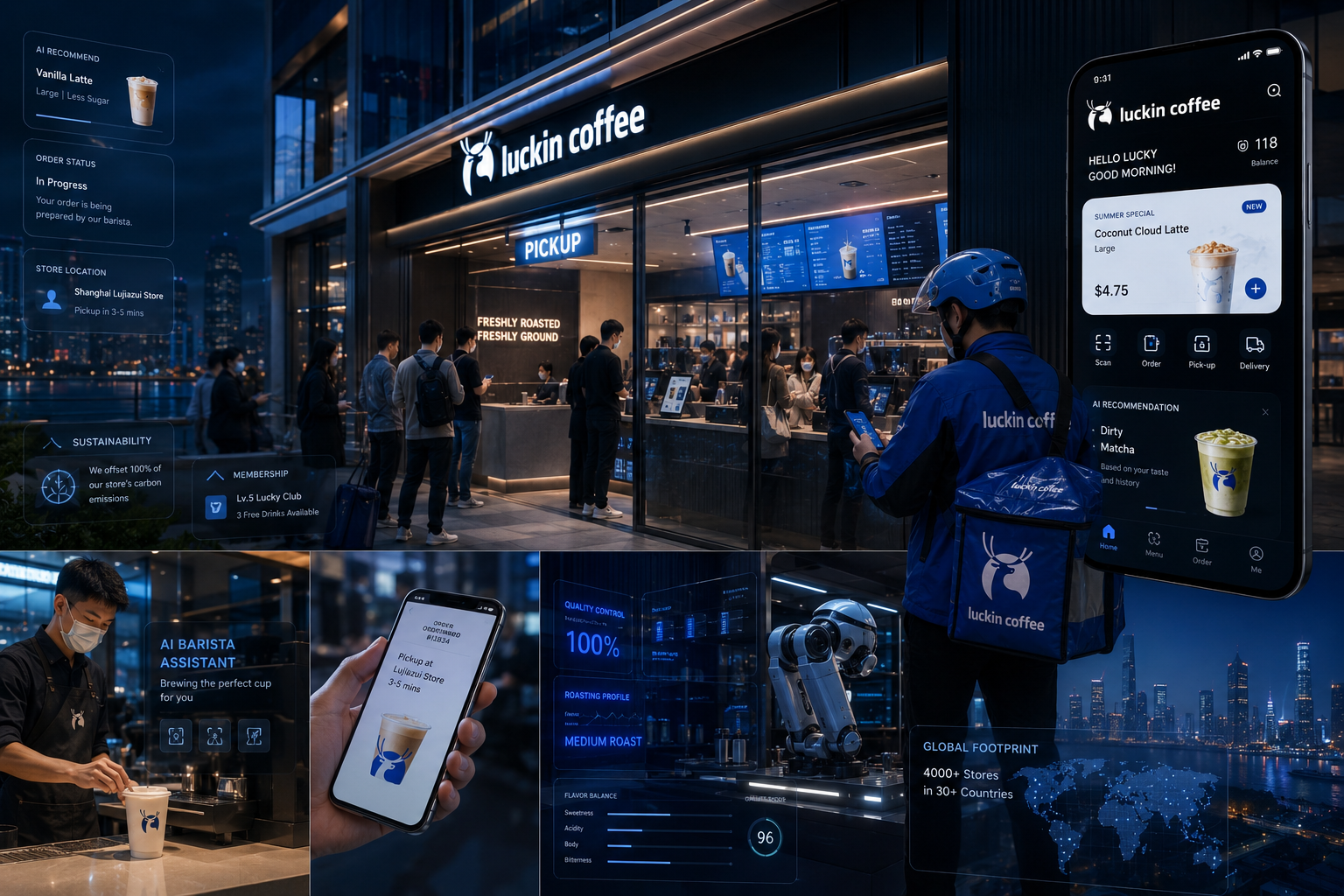
The global coffee industry is moving through a major operational transformation.
For decades, coffee retail growth was largely built around physical store presence, lifestyle-oriented café environments, and premium location dominance. Success depended heavily on securing high-visibility real estate, building recognizable in-store experiences, and driving customer traffic through traditional retail exposure.
That model is evolving rapidly.
Modern coffee expansion is increasingly shaped by:
- digital ordering ecosystems
- delivery integration
- mobile payment infrastructure
- customer data systems
- commuter-driven purchasing behavior
- operational scalability
- urban convenience culture
This shift is giving rise to a new category of beverage businesses: digital coffee brands.
These brands operate differently from traditional café systems.
They are structured around:
- app-based transactions
- operational efficiency
- compact retail deployment
- technology-enabled customer engagement
- high-frequency consumption behavior
Luckin Coffee has become one of the most visible examples of this transition, reflecting how quickly consumer expectations and urban retail systems are changing globally.
The future of coffee retail may increasingly belong to brands capable of functioning as both beverage operators and digitally integrated retail infrastructure.
Coffee Retail Is Becoming Technology Infrastructure
The strongest modern coffee brands are no longer competing only through:
- beverage quality
- store aesthetics
- physical visibility
- lifestyle branding
They are increasingly competing through:
- transaction speed
- digital convenience
- operational intelligence
- delivery optimization
- customer retention systems
- data-driven scalability
This changes how coffee businesses grow.
Technology is becoming central to:
- customer acquisition
- order frequency
- operational efficiency
- territory expansion
- loyalty retention
- inventory coordination
As a result, digital infrastructure is now influencing competitive positioning across the coffee sector.
Why Consumer Behavior Is Changing
Several structural trends are accelerating the rise of digital coffee brands.
Mobile-First Purchasing Behavior
Smartphones now function as primary commercial interfaces for millions of consumers globally.
Consumers increasingly expect to:
- browse digitally
- customize instantly
- pay through mobile systems
- collect rewards automatically
- receive delivery tracking
- reorder quickly
This behavior extends naturally into coffee consumption.
The modern beverage customer increasingly values:
- frictionless ordering
- convenience
- speed
- personalization
- app integration
Brands unable to operate effectively inside digital ecosystems may face increasing pressure as consumer behavior continues evolving.
Urban Time Compression
Modern urban environments are becoming increasingly time-sensitive.
Office professionals, commuters, and younger consumers often prioritize operational convenience over extended in-store experiences during daily routines.
This is particularly visible across:
- transit corridors
- business districts
- mixed-use developments
- university zones
- dense residential environments
Digital coffee systems align closely with this shift because they reduce transaction friction while improving customer throughput.
Delivery Culture Is Reshaping Beverage Consumption
Delivery infrastructure has fundamentally changed how consumers interact with food and beverage brands.
Coffee delivery was once viewed as secondary retail behavior.
Today, delivery integration is central to many urban coffee systems.
Consumers increasingly order beverages:
- to workplaces
- to residential buildings
- during meetings
- through app ecosystems
- as part of recurring digital purchasing habits
This creates major opportunities for digitally optimized coffee brands capable of integrating efficiently into delivery infrastructure.
Why Compact Retail Formats Are Winning
One of the most important shifts inside coffee expansion is the movement toward smaller operational footprints.
Traditional large-format cafés require:
- premium real estate
- extensive fit-outs
- larger staffing structures
- longer deployment timelines
- higher operational overhead
Digitally integrated coffee systems often operate more efficiently through compact formats optimized for:
- pickup
- delivery
- commuter accessibility
- high transaction frequency
Compact deployment creates several strategic advantages:
- faster rollout speed
- lower setup complexity
- stronger multi-unit scalability
- improved urban density coverage
- easier district-level expansion
This is especially important in expensive urban environments where real estate efficiency increasingly influences growth strategy.
Why Luckin Coffee Became a Global Expansion Signal
Luckin Coffee emerged during a period when consumer behavior was shifting rapidly toward:
- mobile commerce
- app-based ordering
- delivery ecosystems
- convenience retail
- digital engagement
Its operational structure aligned closely with these trends.
Instead of treating digital infrastructure as an additional feature layered onto traditional retail, the system was designed around app-based behavior itself.
This creates operational efficiencies in:
- ordering workflows
- customer management
- promotional systems
- loyalty retention
- delivery coordination
- expansion scalability
As urban populations continue adopting mobile-first consumption habits, digitally native coffee systems may continue gaining structural advantages.
The Importance of Customer Data Ecosystems
Digital coffee brands operate with significantly greater customer visibility than traditional retail systems.
Technology-enabled platforms can analyze:
- purchasing frequency
- peak ordering periods
- customer preferences
- regional consumption patterns
- delivery behavior
- loyalty performance
This data supports:
- targeted marketing
- territory optimization
- operational forecasting
- inventory efficiency
- expansion planning
Data visibility is becoming one of the strongest competitive advantages in modern retail.
Why Investors Are Watching Digital Coffee Brands
Investors increasingly view digitally integrated coffee systems as scalable retail-tech businesses rather than purely traditional beverage operators.
Several structural characteristics attract investor interest:
- recurring consumer demand
- strong transaction frequency
- operational scalability
- delivery compatibility
- app retention ecosystems
- customer data infrastructure
The strongest digital coffee brands combine:
- premium consumer positioning
- technology integration
- scalable operations
- urban convenience
This creates strong long-term expansion potential.
Best Markets for Digital Coffee Expansion
Several international regions continue showing strong conditions for technology-driven coffee growth.
Middle East
The Middle East remains highly attractive for digital coffee systems due to:
- smartphone penetration
- premium consumer spending
- delivery ecosystem maturity
- younger demographics
- modern retail infrastructure
Key growth cities include:
- Dubai
- Riyadh
- Doha
- Abu Dhabi
- Kuwait City
These markets continue demonstrating strong demand for premium convenience retail.
Southeast Asia
Southeast Asia remains one of the fastest-growing app-based consumer regions globally.
The region benefits from:
- mobile-first consumer behavior
- high urban density
- strong commuter traffic
- rapidly expanding delivery infrastructure
- younger populations
Key cities include:
- Jakarta
- Bangkok
- Manila
- Kuala Lumpur
- Singapore
- Ho Chi Minh City
These conditions align strongly with digital coffee expansion systems.
Europe
Several European markets are increasingly shifting toward:
- commuter-oriented coffee purchasing
- fast pickup systems
- digitally integrated ordering
- delivery-enabled retail behavior
This creates strong conditions for scalable compact-format coffee deployment.
The Next Phase of Coffee Retail
The future of coffee expansion will likely depend heavily on how effectively brands integrate:
- technology
- logistics
- customer data
- convenience infrastructure
- urban deployment systems
Traditional cafés will likely remain important in:
- premium lifestyle environments
- tourism-driven markets
- flagship retail districts
However, digitally integrated systems may increasingly dominate:
- commuter corridors
- high-density business districts
- delivery ecosystems
- fast-transaction urban retail
The industry is evolving toward multiple operational models optimized for different forms of consumer behavior.
Digital Coffee Brands and Multi-Unit Scalability
One of the strongest advantages of digitally integrated coffee systems is rollout efficiency.
Technology-driven operating structures allow:
- faster territory penetration
- standardized workflows
- streamlined staffing systems
- district-level clustering
- delivery-zone optimization
This improves scalability across large urban markets.
For operators and expansion groups, the ability to deploy efficiently across multiple units becomes increasingly important as competition intensifies inside premium beverage retail.
Strategic Conclusion
The future of digital coffee brands reflects a broader transformation occurring across global retail infrastructure.
Coffee is evolving beyond traditional café environments into a technology-enabled convenience ecosystem driven by:
- app-based ordering
- delivery integration
- customer data systems
- compact deployment
- urban scalability
- operational intelligence
Luckin Coffee’s rise demonstrates how quickly digital consumer behavior can reshape an industry once dominated by physical retail experience alone.
As urban populations continue prioritizing speed, convenience, and mobile engagement, digital coffee brands may increasingly define the next phase of international coffee expansion.
For investors, operators, developers, and market-entry groups, the long-term opportunity lies at the intersection of beverage demand, technology infrastructure, and scalable urban retail systems.
Explore Strategic Luckin Coffee Franchise and Market-Entry Opportunities
Explore strategic Luckin Coffee franchise and market-entry opportunities:
Leave a Reply